* Function Description:
1.Our vision system detects the burner’s direction and air leakage via image capture; if it has no air leakage, proceed to the next process.
2.The system adjusts the burner to a uniform direction by rotating them, then continues conveying them to the next station
* Here are three options for you:
-300x200.jpeg)
-300x235.png)
-300x168.png)
Tray loading Hand-loading(Coated Bulb) Vibrating disc feeder
This equipment integrates three vibratory disc feeders, corresponding to three types of materials: fixring, adjust ring, and base respectively.
* Function Description:
-
-
- Turntable A (Fixring Feeding) ——Positioning is achieved through visual orientation, and the burner is simultaneously and accurately insert into the fixring.
- Turntable B (Adjust Ring Feeding) ——Once the adjusting rings are in place after feeding, the fixrings with pre-installed burners are precisely covered onto the adjust rings.
- Turntable C (Base Feeding) ——After the bases are fed, the assembled materials (from B) are inserted into the bases. Subsequently, they are pushed to the fixed focusing plate, preparing for the focusing process.
- The 9005/9006 Focusing Machine features a 5-axis pull-rod focusing system, with focusing executed on a fixed plate. Equipped with imported SCHUNK cylinders for burner clamping, it delivers superior precision.
- Lamp assemblies are permanently joined via 8-spot laser welding process.
* Two preset focusing modes are available:
·E-value only focusing
·Full-dimension focusing compliant with ECE standards (e、h1、h2、h3)
All parameters are customizable in the backend per customer requirements.
* Function Description:
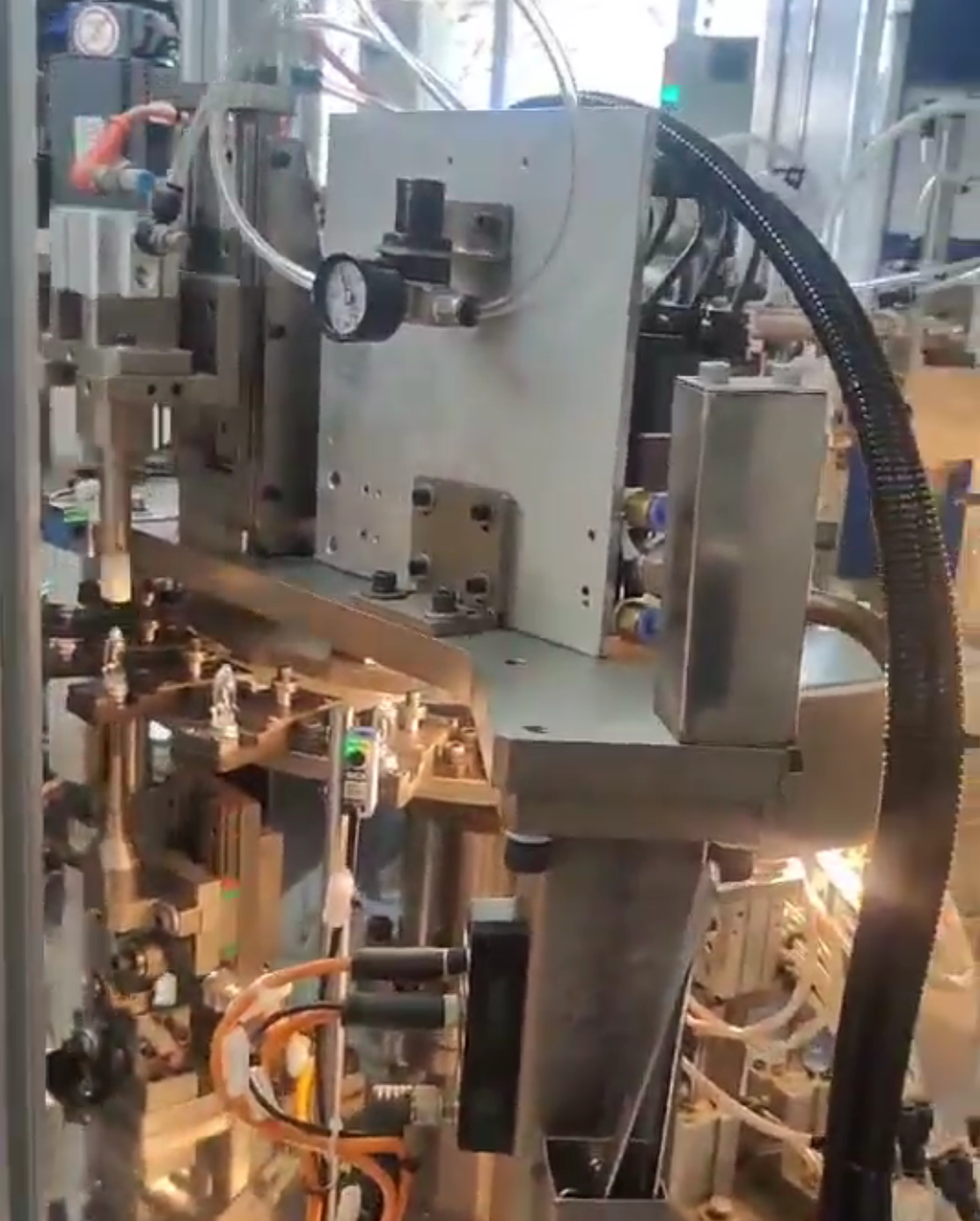
Argon arc Leadwire Welding Machines generate electric arcs to melt the metal points of pins and base for welding purposes. Meanwhile, based on product characteristics and customer requirements, we additionally integrate leakage testing and cold-state resistance inspection functions into the basic capabilities of this Leadwire Welding Machine.
Noted:
1.Leakage testing:Bulbs with missing solder joints or burned-through Base will have unqualified products automatically rejected after leakage testing.
2.Cold-state resistance inspection:If the filament has a cold solder joint, its resistance value will be relatively high, and unqualified products will be automatically rejected after the resistance test.
The top-coating process is a process in which a coating is made on the surface of the glass tube end of the bulb to inhibit the light of the bulb illuminated from the vehicle’s headlamps directly forward.
The process sequence automatically injects the assembled product to form a film with coated paint at the end of the glass tube surface and dries the paint at high temperatures baking.
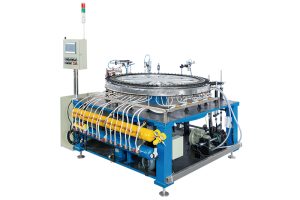
* For different glass materials, we offer two types of Top-coating machines and corresponding baking solutions:
1. Electric Heating Plate Top-Coating Machine
Applicable Object: Hard glass bulbs.
Core Baking Method: Uses an electric heating plate for heating.
Core Advantage: Uniform heating, which is less likely to cause stress on the bulbs.
2. Combined Electric + Flame Baking Coating Machine
Applicable Object: Quartz glass bulbs.
Segmented Baking Process:
Preheating Stage: Preheats the bulb via electric baking;
Preliminary Baking Stage: After the coating operation, continues with preliminary baking using electric heating;
Curing Stage: Finally, uses flame baking to cure the light-shielding coating.
* Common Features:
Both Top-coating machines adopt a 700°C high-temperature baking process. Under this high-temperature condition, the silicon powder and iron powder in the light-shielding liquid can penetrate into the interior of the glass, ultimately ensuring that the light-shielding coating of the lamp has a firm adhesion effect.
* Function Description:
The 9005/9006 Final Inspection Machine performs final dimensional inspection on finished assembled 9005/9006 lamps, inspection parameters e,f,h1,h2,h3. The program can be set to the dimensional range specified in ECE standards, or the tolerance range of each parameter can be modified according to customer requirements. Finally, at the subsequent station, fit the qualified lamps with O-rings and sort out the unqualified products.

* Here are three options for you:
Laser marking/Inject printing/Pad printing
* Function Description:
The finished product during the vision inspection is completed by marking [brand name, part number, specification, date of manufacture, origin, and other customer requirements] on the surface of the BASE according to the input value.
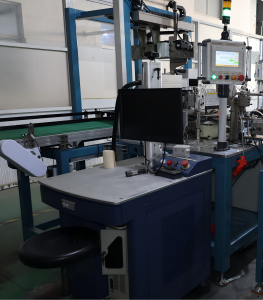
Finished products are automatically discharged onto trays, available in unloading modes such as Belt conveyor and Tray unloading.
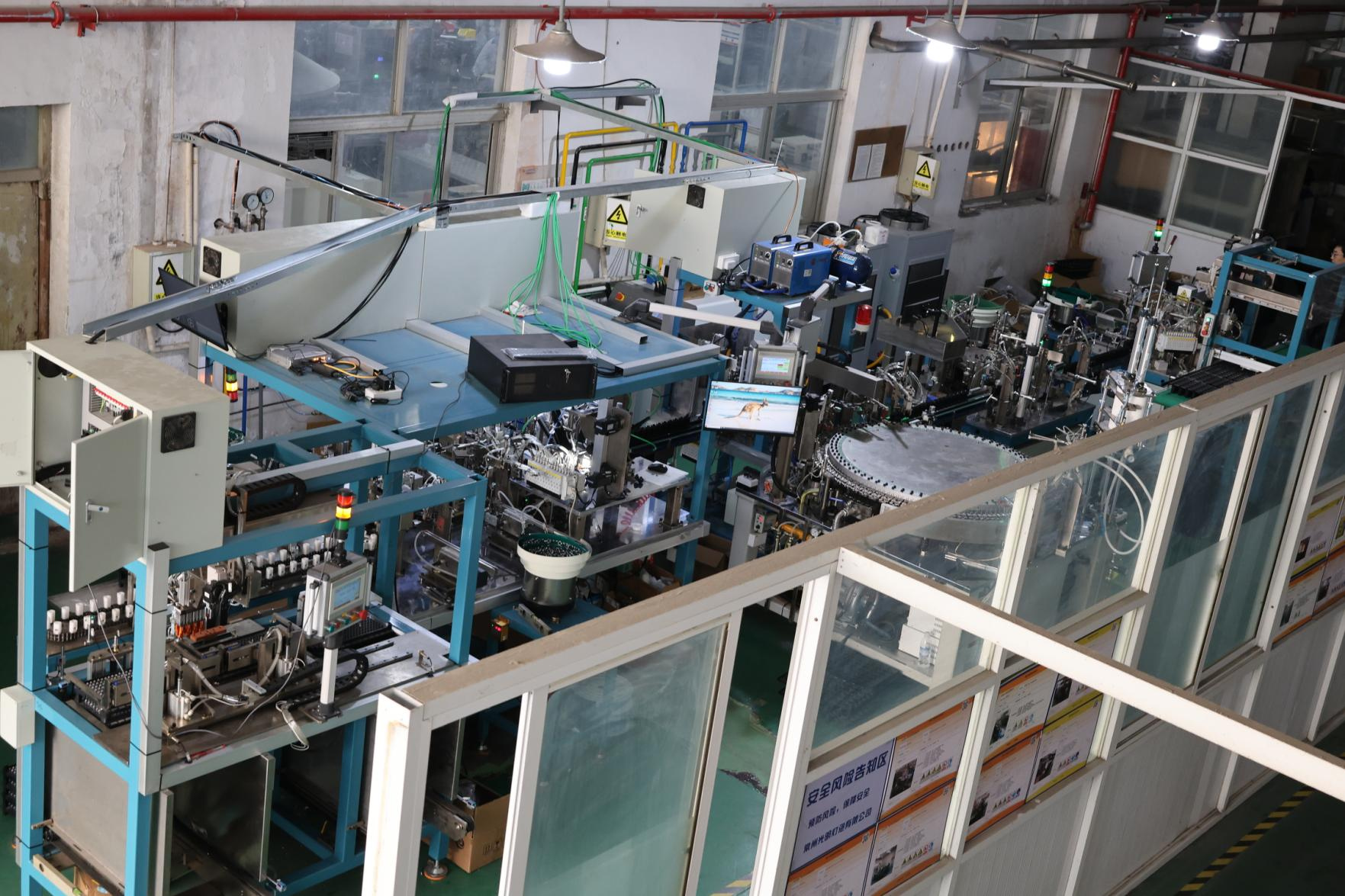
 Complete Line
 Mon - Sat, 9:00 AM - 5:30 PM CST






 Tel:+86-757-81036610