Share:


Halogen headlight bulbs are widely used in automotive lighting because of their stable performance, affordability, and reliable illumination. However, the quality of halogen bulbs on the market can vary significantly. Understanding how to judge the quality of a halogen headlight bulb is important for manufacturers, distributors, and automotive lighting professionals.
In this article, we will explain several key factors that determine the quality of a halogen bulb.
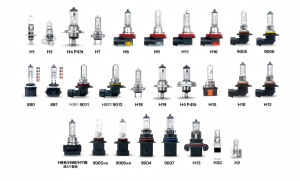
The filament is the most critical component of a halogen bulb. Its position directly affects the beam pattern and light distribution.
A high-quality halogen bulb requires precise filament positioning. If the filament is bent, tilted, or misplaced, the light will not focus correctly in the reflector or projector system.
As a result, the vehicle may experience:
To ensure accuracy, professional manufacturers often use halogen bulb focusing machines during production.
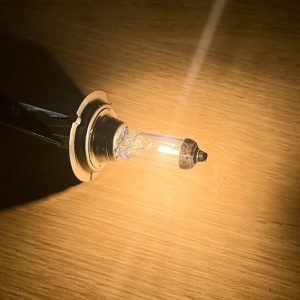
The glass capsule contains the filament and halogen gas. Its quality affects both durability and lighting performance.
A high-quality capsule should have:
Poor capsule quality can lead to early failure or unstable light output.
Halogen bulbs rely on a sealed environment with a specific halogen gas mixture. Proper sealing ensures stable performance and long service life.
If the sealing is not reliable, the gas may leak during operation, leading to:
Therefore, sealing quality is a critical indicator of bulb reliability.
The base, fixing ring, and other mechanical components must be assembled with high precision.
If the base position is inaccurate, the bulb may not sit correctly inside the headlamp housing. This misalignment can affect the beam focus and lighting performance.
Modern manufacturers use automatic halogen bulb assembly lines to maintain consistent assembly accuracy.
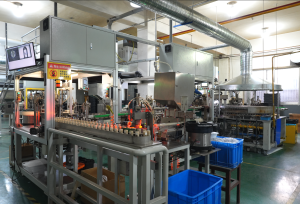
Before entering the market, high-quality halogen bulbs should undergo strict testing.
Important parameters include:
These tests ensure that the bulb meets automotive lighting standards.
To maintain stable production quality, many manufacturers use automatic Visual sorting and inspection systems.
These systems can detect defects such as:
Automatic inspection helps eliminate defective products before shipment.

The quality of a halogen headlight bulb depends on several critical factors, including filament alignment, capsule quality, sealing, assembly accuracy, and strict quality inspection.
For manufacturers aiming to produce high-quality halogen bulbs that meet OEM standards, investing in precision automation equipment and reliable quality control systems is essential.
The most common cause is incorrect filament positioning. Even a small deviation in filament location can significantly affect the beam pattern.
Because the reflector and projector systems are designed to work with a precisely positioned filament. If the filament shifts, the headlight cannot focus light correctly.
Professional manufacturers use automated equipment such as:
These systems ensure consistent production quality.
 Mon - Sat, 9:00 AM - 5:30 PM CST